
Obituaries/Transitions
If you are a SSSP member and would like to post an obituary/transition, please contact the Administrative Office at sssp@utk.edu. Obituaries/Transitions will remain posted for 2 years.
Kai T. Erikson, 1931-2026
SSSP Past President, 1970-1971, Yale University
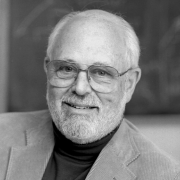 |
Kai T. Erikson, a sociologist who examined the aftermaths of floods, nuclear accidents, hurricanes and chemical spills to illustrate how disasters damage what he called the “tissues of communal life,” inflicting collective trauma that can outlast physical wounds, died on Nov. 10 in Hamden, Conn. He was 94.
His death, at a retirement home, was announced by Yale University, where he taught from 1966 to 2000.
Professor Erikson worked in the academic shadow of his father, the renowned psychoanalyst Erik Erikson, a Sigmund Freud disciple whose psychosocial development theory described a series of internal psychological crises that individuals face throughout their lives.
Aiming his own analytical lens outward, Professor Erikson probed the social and cultural trauma that is visually imperceptible after natural and man-made disasters, traveling so frequently to far-flung calamities that The Times of London called him “Professor Catastrophe From America.”
“Collective trauma works its way slowly into the awareness of those who suffer from it, so it does not have the quality of suddenness usually associated with ‘trauma,’” he wrote in “The Sociologist’s Eye: Reflections on Social Life” (2017). “But it is a form of shock all the same, a gradual recognition that the community no longer exists as a source of support or solace.”
Professor Erikson became interested in disasters by accident.
In 1973, he received a call out of the blue from a lawyer representing residents of Buffalo Creek, W.Va., a coal mining community where a dam had failed, unleashing 132 million gallons of thick black liquid that gushed through a narrow mountain hollow in waves 20 feet high. More than 100 people died. Thousands were left homeless.
The lawyer asked Professor Erikson if he knew a graduate student who might be willing to spend a semester studying the aftermath. “I told him over the phone that I could make a more informed recommendation if I saw the site myself,” Professor Erikson wrote.
After a few hours looking around Buffalo Creek, he took the job.
“I had never seen or even imagined anything remotely like that — desolate, dark, a scene of such heavy, muted pain that I have a hard time finding words to capture it decades later,” he wrote. “I was drawn to the place as if by a compulsion.”
Professor Erikson spent more than a year interviewing survivors, reviewing legal depositions, attending community meetings and observing daily life as residents struggled to rebuild their homes and their way of living.
He detailed their struggles in “Everything in Its Path: Destruction of Community in the Buffalo Creek Flood” (1976), a mix of social science, narrative journalism and oral history. It was a finalist for the National Book Award in the contemporary thought category.
“Social scientists will, I hope, take note of the vitality and creativity of which their discipline is capable,” the author and political activist Michael Harrington wrote in The New York Times Book Review. “Nonacademic readers will encounter an exciting, enriching book.” He called it “a triumph of contemporary understanding.”
In the book, Professor Erikson let Buffalo Creek residents speak in their own voices, rather than paraphrasing them in academic jargon.
“The flood in its own way destroyed my past in the mental sense,” one said. “I knew everybody in the area. That’s where I lived, and that’s what I called home. And I can’t go back there anymore. I can’t even think of it. I have no past.”
To Professor Erikson, the physical damage and psychological displacement amounted to a “loss of flesh” — an acute trauma that becomes an ongoing state of mind, with permanent feelings of despair, anguish and emptiness.
“When the people of Buffalo Creek stood there and watched their possessions crash down the hollow, they were watching a part of themselves die,” he wrote. “To lose a home or the sum of one’s belongings is to lose evidence as to who one is and where one belongs in the world.”
Over the next 40 years, Professor Erikson traveled the world to embed himself in the aftermath of catastrophic events — a mercury spill in Ontario, the nuclear reactor accident in Three Mile Island, Pa., the Exxon Valdez oil spill in Alaska the flooded streets of New Orleans after Hurricane Katrina and other tragedies.
Professor Erikson’s instinct to immerse himself in the places he wrote about was a throwback to the early days of sociology, when research was grounded in lived experience rather than the quantitative statistics and technical theory that pervades the field today.
“He was concerned with broad problems and big ideas, and he wrote about them beautifully,” Jeffrey Alexander, a sociologist at Yale, said in an interview. “You learn a lot about social order when it is very abruptly and visibly destroyed. You understand what really ties society together.”
Professor Erikson often testified in court on behalf of victims.
“Legend has it that his powerful presence and voice became so well-known and feared by opposing counsel that once, when he was seen to enter a courtroom for the defense unannounced, the other side immediately settled,” Yale said in announcing his death.
Kai Theodor Homburger was born on Feb. 12, 1931, in Vienna, Austria, to Erik and Joan (Serson) Homburger.
After the family immigrated to the United States in the early 1930s, Kai was reportedly taunted at school and called “Hamburger” by other students. His parents decided to change their last name.
Kai was studying sociology at Reed College in Portland when his father’s best-known book, “Childhood and Society,” was published in 1950. After graduating in 1953, he received his master’s degree and doctorate from the University of Chicago.
With an interest in field work, he spent several months immersing himself in a Polish community in South Chicago.
“That experience of the ‘feel of the streets’ made a deep impression on me, and it played a far greater role than I realized at the time in influencing my sense of what ‘social life’ really is and how one might go about studying it,” he wrote in “The Sociologist’s Eye.”
Before turning to disasters, he wrote “Wayward Puritans: A Study in the Sociology of Deviance” (1966), examining how deviant behavior “can sometimes be a valuable resource in society, providing a point of contrast, necessary for the maintenance of a coherent social order.”
Professor Erikson married Joanna Slivka in 1961. She survives him, along with their sons, Keith and Christopher Erikson; a sister, Sue Erikson Bloland; and four grandchildren.
At Yale, Professor Erikson was to his admirers a lot like the inspirational teacher played by Robin Williams in the 1989 movie “Dead Poets Society” — though he wasn’t given to spouting poetry while standing on desks.
His former student, the author and political satirist Christopher Buckley, remembered him in an interview as the “Pied Piper.”
“We started a cult of Kai Erikson without him really knowing it,” Mr. Buckley said, recalling how he and his roommates, the future New York Times journalists Michiko Kakutani and John Tierney, went so far as to tape his discarded cigarette butts to their refrigerator.
They even staged a festival in his honor on their front lawn.
“It was just a funny concept that Kai Erikson was a god,” Mr. Buckley said, “and yet he was also this humble professor.”
Read the obituary on New York Times and In Memoriam published in Yale News.
Posted: 03/31/2026
James D. Orcutt, 1943-2026
SSSP Past President, 1994-1995, and Editor of Social Problems, 1984-1987, Florida State University
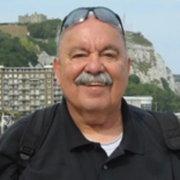 |
James (Jim) D. Orcutt, age 82, died peacefully at home in Tallahassee on February 25, 2026, after a long illness. His wife and devoted caregiver, Annette, was at his side, along with his brother-in-law, Ray, and sister-in-law, Pat. Jim was raised in Des Moines, Iowa, and was predeceased by his parents, Albert and Doris Orcutt, and siblings David Orcutt and Phyllis Bergeson. He is survived by his sister, Kate Capps; wife, Annette Schwabe; daughter, Michelle Orcutt; stepson, Derek Schwabe-Warf (Dori Ballai); sisters- and brothers-in-law; and many nieces, nephews, and friends. After completing his bachelor’s and master’s degrees in sociology from the University of Iowa Jim served as a psychiatric operations specialist in the army. He earned a PhD from the University of Minnesota and began his research and teaching career in the Sociology Department at Florida State University in 1972 and retired as Professor Emeritus in 2007.
Jim was an accomplished scholar, a devoted instructor, an effective administrator, and a generous colleague. He wrote two books and scores of journal articles in his specialty areas of deviance and drug and alcohol problems. He served as department chair, engaged in extensive university service, taught multiple undergraduate and graduate courses in his specialty areas and received departmental and university teaching awards. He also served as a grant reviewer for several organizations. Jim was a beautiful writer, and his willingness to pass on editing tips and intellectual critiques was much appreciated by his colleagues. His election to the presidency of the Society for the Study of Social Problems and his appointment as editor of the journal Social Problems signify the high regard in which the profession held him and his dedication to advancing the field of sociology.
Jim was a loving and warm spouse, brother, father, and friend. He was an accomplished musician and had a wonderful sense of humor, a deep curiosity about the world and other people, and a strong sense of justice. He will be dearly missed by so many, but we are grateful for his beautiful presence in our lives.
Jim will continue to serve students through the Florida Anatomical Donation program, which supports medical training and research to facilitate advancements in health. Donations to honor Jim may be made to the FSU Department of Sociology, Big Bend Hospice, Epilepsy Agency of the Big Bend, RBG Fund, Refuge House, or https://riseinternational.org.
Breanna Green of Bevis Funeral Home (850-385-2193 or www.bevisfh.com) is assisting the family with their arrangements.
Posted: 03/9/2026
Brett Lesley Cumberbatch, 1983-2025
 |
We are saddened to share the passing of one of our members. Click here to read his obituary.
Posted: 03/17/2025
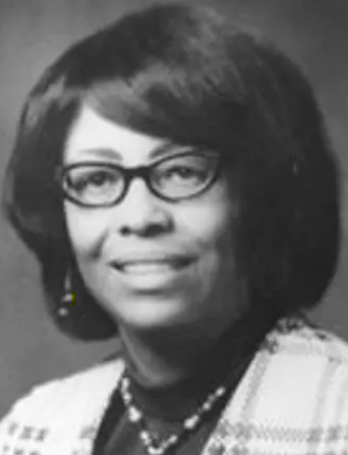
Doris Y. Wilkinson, 1936-2024
SSSP Past President, 1987-1988
 In honor of her contributions, the Society established the Doris Wilkinson Faculty Leadership Award in 2015. If you would like to make a donation in memory of Dr. Wilkinson, please click here.
Dr. Doris Y. Wilkinson, 88, passed away on Sunday June 23, 2024. Doris was born on June 13,1936 in Lexington, Kentucky to Howard T. and Regina L. Wilkinson. In addition to her parents, Doris was preceded in death by her sister, Carolyn Wilkinson-Baker. Survivors include first cousins: Janice LaRue, William Simms, Veronica Simms, Jacqueline French, Carol Ann Morton, Austin Simms (Daisy), Mary Jean Cowherd, JoAnn Washington (Robert), Albert Harris, John Harris (Darlene), Patricia Lewis and a special second cousin, Tommy Lee Lewis. Doris was a member of East Second Street Christian Church and attended Historic Pleasant Green Missionary Baptist Church.
She attended the Old Paul Lawrence Dunbar High School where she was Valedictorian of her graduating class and was also crowned homecoming queen. In the fall of 1954, just a few months following the United States Supreme Court Brown v. Board of Education ruling that separate schools for white and black students were unconstitutional, Doris enrolled at the University of Kentucky. Doris, being a part of the first class of African American four-year undergraduate students to integrate the university, graduated in three and a half years with her B.A. in sociology in 1958. She earned her graduate degrees from Case Western Reserve University, M.A, 1960 Ph.D., 1968. She also earned a master’s in public health from Johns Hopkins University in 1985.
Prior to beginning her career at the University of Kentucky, Doris was one of the earliest African American female faculty members at Kent State as an instructor of sociology and anthropology. In 1969, Doris began her career at the University of Kentucky when she joined the Department of Sociology and was the first African American woman to become a full-time faculty member. Just two years later she was recognized as an outstanding faculty member by the Associated Women Students group. During her tenure at the University, she founded the Forum for Black Faculty, which is considered to be the first social club for black women at the school, the Carter G. Woodson Lecture Series for untenured faculty, the Black Women’s Conference and was also the founder and director of Black Studies renaming it the African American Studies and Research Program.
In 1972, she was appointed to the Department of Interior Task Force on the National Parks System. She was listed in the Worlds Who’s Who of American Women in 1975. In 1976, she was appointed to the National Endowment for the Humanities Public Program Review Panel. Doris was appointed to the Board of Overseers of Case Western Reserve. In 1976, Doris was also appointed Chair of a social science panel for the National Science Foundation’s Women in Science Program. She was initiated into Phi Beta Kappa in 1978, and that same year was awarded a grant from the National Institute of Education to establish a research skills institute for women and minorities, the first institute of its kind under the auspices of the American Sociological Association. From 1980-1984, she served on the board of scientific counselors of the National Cancer Institute. In 1982 she was awarded a contract from the Southern Education Foundation to study black colleges and universities. In 1988, she received a grant from the Kentucky Humanities Council to study and plan a community wide exhibit on early African American physicians from 1890-1950. The resulting 1988 exhibit was titled "Forgotten Pioneers in a Southern Community: Black Physicians in Lexington from 1890 to 1950." In 1989, the exhibit was made into a semi-documentary by Kentucky Education Television. Additionally, this research produced the 1998 Directory of African Americans in Lexington, Kentucky, and a "Guide to the African American Heritage Trail in Downtown Lexington, Kentucky."
Doris was a recognized leader in the field of Sociology and held positions of President of the Eastern Sociological Society, Vice President of the American Sociological Association, President of the Society for the Study of Social Problems and President of the District of Columbia Sociological Society, an honor bestowed upon only a few women social scientists. Doris published numerous research articles and critical essays on race and gender. Doris also garnered many honors and awards, both national and local, including the American Sociological Association’s Dubois-Johnson Frazier Award for exemplary contributions to minority research and the field of race relations, the University of Kentucky Great Teacher Award, ,the Distinguished Professor Award from the University of Kentucky College of Arts and Sciences, the Public Understanding of Sociology Award from the American Sociological Association, and the Lifetime Achievement Award from Women Leading Kentucky. Doris was the first African American elected to the University of Kentucky’s Hall of Distinguished Alumni Award in 1989. She was also a visiting Ford Foundation Fellow at Harvard University from 1989-1990.
In 2015, the Doris Wilkinson Faculty Leadership Award was established and is awarded annually with a stipend of $500 to an outstanding faculty member who has exercised an extensive leadership role within the Society for the Study of Social Problems (SSSP) and other professional societies and within the larger community.
In 2019, Doris was one of three individuals chosen by the University of Kentucky to receive an Honorary Doctor of Humane Letters. This honor was announced during the University of Kentucky recognition of 70 Years of Integration event. Due to Doris’ health, she was unable to attend the event to receive this honor. Dr. Eli Capilouto, along with several of his provosts came to the nursing home in academic regalia to make the presentation at a private gathering and reception…that accommodation was very special to both Doris and her family.
In recognition of her efforts, the University of Kentucky established the Doris Wilkinson Distinguished Professorship in Sociology and the Humanities, the Doris Y. Wilkinson Conference Room in Breckinridge Hall, and the Doris Y. Wilkinson Award for Leadership.
Doris was the recipient of many more awards and recognitions, far too many to list, but no less important. She has written, published and reviewed many professional articles and books, including anthologies and co-authored books.
Doris’s extensive publications on race relations and her professional and community service contributions have left an indelible impression on those that called her colleague and professor and can be witnessed throughout Lexington and beyond.
Funeral services will be 1:00 PM on Saturday June 29, 2024 at Milward Funeral Home, 391 Southland Drive, Lexington KY 40503. Visitation will be prior to the service from 11:00 AM – 1:00 PM. Internment at Cove Haven Cemetery, 984 Whitney Avenue, Lexington KY.
Click here to read a Lexington Herald Leader article honoring Doris Y. Wilkinson.
Posted: 06/25/2024
Find Archived Obituaries/Transitions Here.
