
Obituaries/Transitions
Doris Y. Wilkinson, 1936-2024
SSSP Past President, 1987-1988
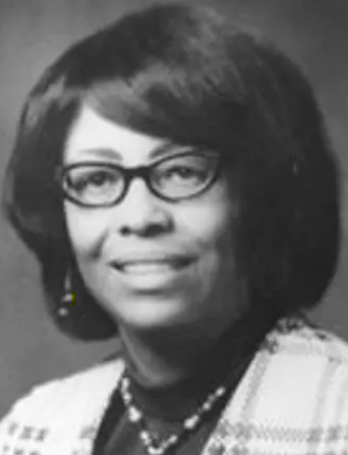 In honor of her contributions, the Society established the Doris Wilkinson Faculty Leadership Award in 2015. If you would like to make a donation in memory of Dr. Wilkinson, please click here.
Dr. Doris Y. Wilkinson, 88, passed away on Sunday June 23, 2024. Doris was born on June 13,1936 in Lexington, Kentucky to Howard T. and Regina L. Wilkinson. In addition to her parents, Doris was preceded in death by her sister, Carolyn Wilkinson-Baker. Survivors include first cousins: Janice LaRue, William Simms, Veronica Simms, Jacqueline French, Carol Ann Morton, Austin Simms (Daisy), Mary Jean Cowherd, JoAnn Washington (Robert), Albert Harris, John Harris (Darlene), Patricia Lewis and a special second cousin, Tommy Lee Lewis. Doris was a member of East Second Street Christian Church and attended Historic Pleasant Green Missionary Baptist Church.
She attended the Old Paul Lawrence Dunbar High School where she was Valedictorian of her graduating class and was also crowned homecoming queen. In the fall of 1954, just a few months following the United States Supreme Court Brown v. Board of Education ruling that separate schools for white and black students were unconstitutional, Doris enrolled at the University of Kentucky. Doris, being a part of the first class of African American four-year undergraduate students to integrate the university, graduated in three and a half years with her B.A. in sociology in 1958. She earned her graduate degrees from Case Western Reserve University, M.A, 1960 Ph.D., 1968. She also earned a master’s in public health from Johns Hopkins University in 1985.
Prior to beginning her career at the University of Kentucky, Doris was one of the earliest African American female faculty members at Kent State as an instructor of sociology and anthropology. In 1969, Doris began her career at the University of Kentucky when she joined the Department of Sociology and was the first African American woman to become a full-time faculty member. Just two years later she was recognized as an outstanding faculty member by the Associated Women Students group. During her tenure at the University, she founded the Forum for Black Faculty, which is considered to be the first social club for black women at the school, the Carter G. Woodson Lecture Series for untenured faculty, the Black Women’s Conference and was also the founder and director of Black Studies renaming it the African American Studies and Research Program.
In 1972, she was appointed to the Department of Interior Task Force on the National Parks System. She was listed in the Worlds Who’s Who of American Women in 1975. In 1976, she was appointed to the National Endowment for the Humanities Public Program Review Panel. Doris was appointed to the Board of Overseers of Case Western Reserve. In 1976, Doris was also appointed Chair of a social science panel for the National Science Foundation’s Women in Science Program. She was initiated into Phi Beta Kappa in 1978, and that same year was awarded a grant from the National Institute of Education to establish a research skills institute for women and minorities, the first institute of its kind under the auspices of the American Sociological Association. From 1980-1984, she served on the board of scientific counselors of the National Cancer Institute. In 1982 she was awarded a contract from the Southern Education Foundation to study black colleges and universities. In 1988, she received a grant from the Kentucky Humanities Council to study and plan a community wide exhibit on early African American physicians from 1890-1950. The resulting 1988 exhibit was titled "Forgotten Pioneers in a Southern Community: Black Physicians in Lexington from 1890 to 1950." In 1989, the exhibit was made into a semi-documentary by Kentucky Education Television. Additionally, this research produced the 1998 Directory of African Americans in Lexington, Kentucky, and a "Guide to the African American Heritage Trail in Downtown Lexington, Kentucky."
Doris was a recognized leader in the field of Sociology and held positions of President of the Eastern Sociological Society, Vice President of the American Sociological Association, President of the Society for the Study of Social Problems and President of the District of Columbia Sociological Society, an honor bestowed upon only a few women social scientists. Doris published numerous research articles and critical essays on race and gender. Doris also garnered many honors and awards, both national and local, including the American Sociological Association’s Dubois-Johnson Frazier Award for exemplary contributions to minority research and the field of race relations, the University of Kentucky Great Teacher Award, ,the Distinguished Professor Award from the University of Kentucky College of Arts and Sciences, the Public Understanding of Sociology Award from the American Sociological Association, and the Lifetime Achievement Award from Women Leading Kentucky. Doris was the first African American elected to the University of Kentucky’s Hall of Distinguished Alumni Award in 1989. She was also a visiting Ford Foundation Fellow at Harvard University from 1989-1990.
In 2015, the Doris Wilkinson Faculty Leadership Award was established and is awarded annually with a stipend of $500 to an outstanding faculty member who has exercised an extensive leadership role within the Society for the Study of Social Problems (SSSP) and other professional societies and within the larger community.
In 2019, Doris was one of three individuals chosen by the University of Kentucky to receive an Honorary Doctor of Humane Letters. This honor was announced during the University of Kentucky recognition of 70 Years of Integration event. Due to Doris’ health, she was unable to attend the event to receive this honor. Dr. Eli Capilouto, along with several of his provosts came to the nursing home in academic regalia to make the presentation at a private gathering and reception…that accommodation was very special to both Doris and her family.
In recognition of her efforts, the University of Kentucky established the Doris Wilkinson Distinguished Professorship in Sociology and the Humanities, the Doris Y. Wilkinson Conference Room in Breckinridge Hall, and the Doris Y. Wilkinson Award for Leadership.
Doris was the recipient of many more awards and recognitions, far too many to list, but no less important. She has written, published and reviewed many professional articles and books, including anthologies and co-authored books.
Doris’s extensive publications on race relations and her professional and community service contributions have left an indelible impression on those that called her colleague and professor and can be witnessed throughout Lexington and beyond.
Funeral services will be 1:00 PM on Saturday June 29, 2024 at Milward Funeral Home, 391 Southland Drive, Lexington KY 40503. Visitation will be prior to the service from 11:00 AM – 1:00 PM. Internment at Cove Haven Cemetery, 984 Whitney Avenue, Lexington KY.
Click here to read a Lexington Herald Leader article honoring Doris Y. Wilkinson.
Posted: 06/25/2024
Peter Conrad, 1945-2024
SSSP Past President, 1995-1996
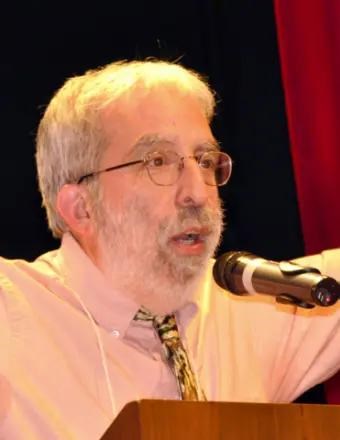 Read an additional In Memoriam from Dr. Phil Brown, Northeastern University.
Peter Conrad, a pioneering medical sociologist who brought attention to the increasing medicalization of society, died in his home in Lincoln, Massachusetts, on March 3rd, 2024. He was 78 years old. He died at home, surrounded by loved ones, listening to Joan Baez. His cause of death was pneumonia after a long experience of Parkinson's.
Peter Conrad, the author of 16 books or monographs and more than 100 articles and chapters, was a dedicated academic at Brandeis University for more than 30 years, where he chaired both the sociology department and the Health: Science, Society, and Policy program.
Peter Franklin Conrad was born on April 12, 1945, in New York City to George Conrad and Gertrude (Rosenthal) Conrad. They were recent Jewish emigres from Germany and Austria, respectively. Conrad always proclaimed that he was a disobedient, distracted student during middle and high school school - one of the sources of his later interest in ADHD - and that he only came alive academically after taking sociology courses at SUNY Buffalo, now the University of Buffalo.
He went on to earn a master's degree from Northeastern University, in part to get a draft deferment from the Vietnam War. As a conscientious objector, he was assigned to do alternative service as an occupational therapy assistant at Boston State Hospital, a historic mental health institution. Witnessing interactions between patients, clinicians and the institution provided him with initial insights that would later lead him to apply sociological tools in examining the medical system's roles in society.
Combining this perspective with sociology's mid-century preoccupation with "deviance", he wrote his PhD dissertation at Boston University, which became his first book, Identifying Hyperactive Children: the Medicalization of Deviant Behavior. Peter began to understand that the diagnosis of hyperkinesis - later called hyperactivity, then ADD, and now called ADHD - "medicalized deviance". It transitioned a perceived "moral failing" into a medical diagnosis. This became a major theme in his research. As the subtitle of one of his most cited books puts it, medicalization transforms from "badness to sickness".
Over his career, he looked at how cultural and social factors in medicalization shape the definitions, perceptions, and experiences of alcoholism, depression, homosexuality, baldness, short boys and tall girls, among other conditions, in addition to ADHD. While many tried moralizing medicalization, Peter resisted that impulse. "I'm not trying to say it's good or bad," he'd often say, "I'm saying it's happening and we should understand it." Though his work was deeply analytical and theoretical, he always rejected the title of "theorist", but prided himself on "conceptualization".
Beyond medicalization, Peter studied the experience of epilepsy, worksite wellness programs, medical education, the social meanings of the new genetics, and illness on the internet. Graham Scambler, emeritus professor at University College London, once wrote that, when it comes to medical sociology, "people and things tend to revolve around Peter."
Peter was elected Chair of the Medical Sociology Section of the American Sociological Association in 1987 and elected President of the Society for the Study of Social Problems in 1995.
He was a dedicated teacher, mentor, and collaborator, and had tremendous pride in the accomplishments of his graduate and undergraduate students, even long after they became his colleagues.
Beyond sociology, Peter had an enduring interest in green spaces and rural heritage in Massachusetts. He served on the Lincoln Conservation Commission, the board of Codman Community Farm, and the community board of Drumlin Farm, a site of the Massachusetts Audubon Society. He also nurtured this interest in his annual vegetable garden, cultivating multiple potato varieties, giving many opportunities for his younger family members to squash potato bugs.
Peter was an avid traveler taking many journeys with his beloved wife and family. These included two sabbatical years abroad: one in Yogyakarta, Indonesia and the other in London, England. He was also a Distinguished Fulbright Scholar at Queens University in Belfast, Northern Ireland, and maintained close professional relationships with colleagues there through a twenty-year visiting faculty appointment.
One of the great joys of his later years was reuniting with a lost branch of his maternal lineage through family research that brought multiple branches of that family together in Munich and later in Washington, D.C. Peter spoke what he called "Kitchen German" from his emigre parents and engaging more deeply with his family history was deeply meaningful.
Though born in New York, Peter was a devoted Boston sports fan, particularly of his beloved Celtics, who were a constant comfort in his last years and a joy he shared with many family members and friends. After his diagnosis with Parkinson's in 2014, he also became deeply involved with Rock Steady Boxing at SLS in Lowell to maintain strength, mobility, and community. He was supported during this time by loving caregivers, most notably Annette and Moses Mugwanya, who were with him during the last four years.
He is survived by his wife, Libby Bradshaw, a physician and assistant professor at Tufts Medical School of Lincoln, MA; his daughter Rya Conrad-Bradshaw, an executive in EdTech of Concord, MA; a son, Jared Conrad-Bradshaw, an educational consultant of Istanbul, Turkey; as well as three grandchildren Rafi, Sela, and Avi, and a son-in-law, Drew Magliozzi, and a daughter-in-law, Rita Ender, both of whom he adored. He is also survived by close-in-heart family members across the world, students from multiple generations, dear friends of more than 50 years (including multiple housemates), and a dog he tolerated. He is predeceased by his sister Nina (Conrad) Furgiuele.
Arrangements are entrusted to Dee Funeral Home & Cremation Service of Concord. To plant trees in memory, please visit the Sympathy Store.
Posted: 03/06/2024
Kathleen Sue Lowney, 1958-2024
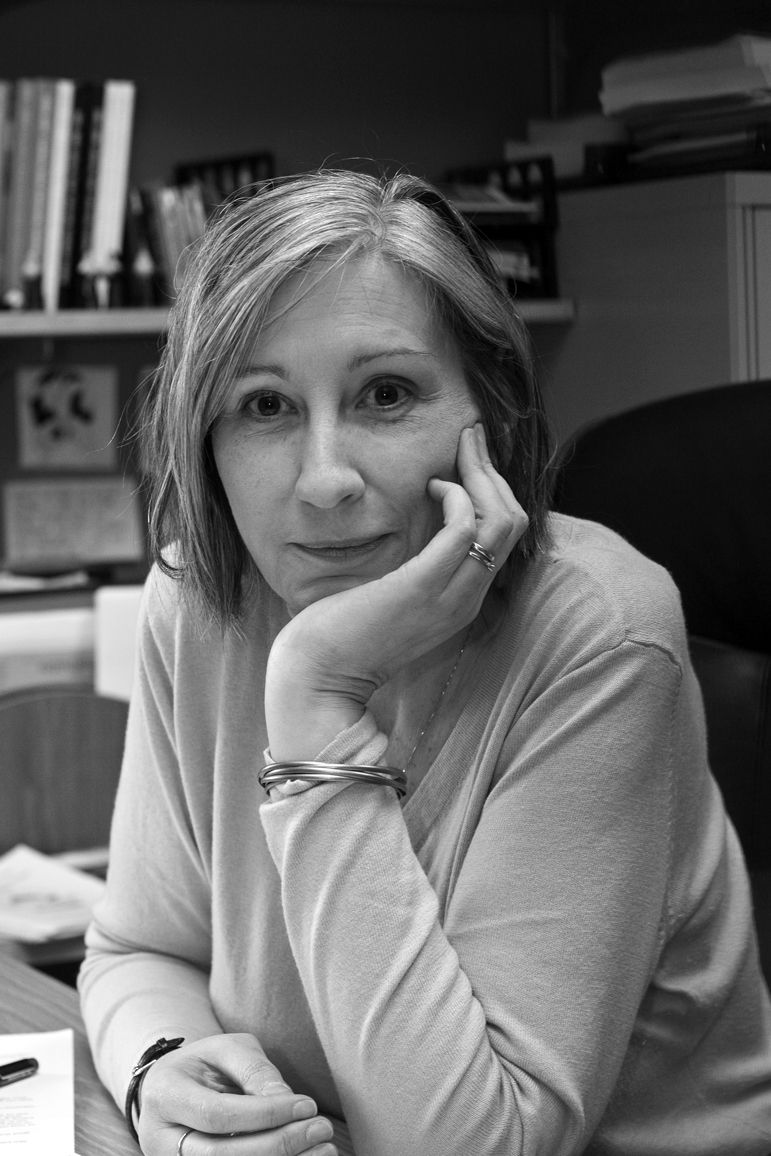
Dr. Kathleen Lowney passed away on Monday, January 8, 2024 after a short illness at the age of 65.
She was born in Butte Montana on November 27, 1958 to Lois and William Lowney. Kathe developed serious allergies and as a result they moved to Seattle. She had a strong interest in sociology and religion and entered the University of Washington where she double majored in Sociology and Comparative Religion. She then entered Drew University where she obtained a Masters degree and continued to obtain a PhD in Religion and Society. She met her future husband Dr. Frank Flaherty there who went to teach physics at Valdosta State College. They were married in 1986 and she moved to Valdosta where she obtained a position at VSU teaching sociology.
She loved teaching and was unafraid to experiment with new techniques for helping students to understand concepts. She was beloved by her students even though she held them to very high academic standards.
Her teaching ability was recognized by numerous teaching awards at the college, state and national level. She also served as the editor of the American Sociology Association’s journal: Teaching Sociology from 2010 to 2014. Dr. Lowney was also the driving force behind instituting a Teaching and Learning Center at VSU to assist faculty to improve their teaching.
Dr. Lowney did not ignore her responsibility as a professor to engage in academic research and publishing. During her time at VSU she wrote four books and 41 journal and book chapter articles.
Dr. Lowney's sister Terri is deceased, and she is survived by her sisters Mary Faure, Debra Hofbauer and Pat Jennings and their families as well as many relatives in Montana. Her kindness and brilliance shone through in her interactions with people. She will be sorely missed not just by her husband, but also by those who had the privilege of getting to know her.
The family will receive friends from 1pm to 3pm on Friday, January 12, 2024 at Townson-Rose Funeral Home Chapel in Murphy. Townson-Rose Funeral Home is in charge of all arrangements. You may send tributes to the family at www.townson-rose.com
Posted: 01/18/2024
Gray Arco Cavender III, 1947-2023

Gray Arco Cavender III passed away on August 8, 2023 from cancer, surrounded by his loving wife, daughter, and son-in-law. Gray served as Professor of Justice Studies at Arizona State University until his retirement in 2017.
He was born on February 24, 1947 to Nell Catherine Choate Cavender and Gray Arco Cavender, Jr. in Princeton, Kentucky, but he grew up in Waverly, Tennessee, where he was a member of the Waverly High School band and a DJ for the local Waverly radio station. He earned his bachelor’s degree in Business from the University of Tennessee (1969), followed by his J.D. degree from the University of Tennessee Law School (1971). After law school, Gray worked as a probation and parole counselor for the State of Tennessee Department of Corrections. In 1972, he assumed a position as Staff Attorney and Supervisor of Judicial Planning with the State of Tennessee Criminal Justice Planning Agency, and was eventually promoted to Assistant Director of the agency. While in this position, he also completed a Master’s degree in Psychology at Middle Tennessee State University, located in Murfreesboro, Tennessee.
Despite the importance of his position in criminal justice planning, Gray longed to return to academic life, to study criminology in greater depth, and to become a university professor. In 1975 he was accepted into the PhD program in Criminology at Florida State University, and so he packed his bags and moved to Tallahassee. In 1977, he accepted a position as an assistant professor at the growing Arizona State University in Tempe, Arizona. While an assistant professor at ASU, Gray completed his PhD in Criminology from FSU (1979). Gray remained on the faculty at ASU for the next 40 years, rising to the rank of Professor and focusing his research and teaching on media, crime and deviance, punishment, and law and society. Gray played a central role in the creation of the nation’s first PhD program in Justice Studies in 1985, serving as its inaugural director. With Pat Lauderdale, he published articles about the rationale for the creation of Justice Studies university degree programs. Over the years, he was a visiting scholar at New York University, John Jay College of Criminal Justice, University of California, Berkeley, Tulane University, and the Institute of Sociology at the Academy of Sciences of the Czech Republic.
Gray was an outstanding teacher and mentor, much admired by students. He was the recipient of several awards for his teaching, and in student exit surveys Gray was frequently mentioned as students’ most influential professor. He brought a wide knowledge of literature, history, and popular culture to his lectures and readily offered inspiration, encouragement, and support for research and theoretical projects. He was beloved by his graduate students, many of whom stayed in close touch with him right until his passing. Gray was an incredible mentor of graduate students and junior faculty alike, gently pushing them to be better and to focus on their goals and aspirations. Many students and colleagues have shared the experience of turning to Gray with a worrisome dilemma and receiving a thoughtful, practical solution. Talking with Gray meant everything would be alright. His students have gone on to prestigious careers as university professors, attorneys, and in other professions across the globe.
In addition to his stellar record as a teacher and mentor, Gray was a nationally and internationally recognized expert in crime, punishment, and the study of media coverage of justice issues. He is the author of scholarly articles, book chapters, and academic books. His work focused on the construction of crime, criminality, and justice policies that reinforced societal inequalities. His study of parole was among the first to point out that despite its ostensible rehabilitative purpose, parole actually served as a mechanism for the extension of social control of so-called dangerous populations (Parole: A Critical Analysis, Kennikat Press, 1982). Later, he critiqued the popular turn to the “justice model,” which advocated retributivism and just desserts as a justification for punishment policy (e.g., Criminology, 1984). His work on corporate and governmental deviance tackled the issues of why our legal system and popular media often fail to recognize the gravity of organizational wrongdoing. Expression of this theme included analyses of the cases of the Ford Pinto deaths, the Iran Contra Scandal, GM Pickup defects/deaths, and Enron price gouging and disintegration (e.g., Corporate Crime Under Attack: The Fight to Criminalize Business Violence, Anderson, 1987, 2006, with Francis Cullen, William Maakestad, and Michael Benson). He then directed his conceptual and methodological expertise toward media constructions of crime, reality, and justice. He began by focusing on the ways that reality crime television programs presented themselves as falsely authentic to viewers (Entertaining Crime: Reality Television Programs, Aldine Gruyter, 1998, with Mark Fishman). His media studies interests also included the presentation of gender and doing justice in fictional crime programs (Justice Provocateur: Jane Tennison and Policing in Prime Suspect, University of Illinois Press, 2012, with Nancy Jurik). His most recent publications included collaborations with Czech and US colleagues on gender, entrepreneurship and justice.
Gray was actively involved in the American Society of Criminology and the Society for the Study of Social Problems throughout his career. He served on several editorial boards during his career for journals such as Criminology, Justice Quarterly, Crime Media Culture, and served as Budget, Finance and Audit Chair for the Society for the Study of Social Problems.
While at ASU, Gray met a colleague who would later become his romantic partner for over 38 years, Nancy Jurik. Gray and Nancy were also research collaborators, giving presentations and publishing research on gender, work, criminal justice, and entrepreneurship. They spent lots of time traveling, hiking, and seeing many movies that they would talk about endlessly (or so said their friends). In 2017, Gray retired from ASU and began to devote most of his writing to crime fiction. His mystery novels, novellas, and short stories (Death of the Ayn Rand Scholar, The Pandemic Casebook of Jillian Warne, and forthcoming compilation, Echoes from Cherry Bottom) can be found on Amazon.
Survivors include his wife Nancy Jurik, daughter Jennifer Cavender Vaden and her husband James, grandson Michael Cavender Smith and his wife Melissa, and a great-grandson, Leo Smith. Gray was extremely proud of his family. He also had close ties to cousins Miriam Longino, John Longino, Daniel Gray Longino and their families (Sujata, Lela, and Diana). Gray will be missed by many students, colleagues, neighbors and friends. Gray was a kind, intelligent man who was always happy to help his friends and students. He told great stories, whether oral or written, always with a disarming sense of humor. We will miss him very much, but he will live on in our hearts.
Marjorie Zatz, University of California-Merced
Paul Knepper, San José State University
Posted: 09/11/2023
Dorothy E. Smith, 1926-2022
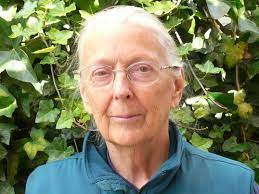
Dorothy E. Smith, the renowned sociological thinker, feminist critic, teacher, and mentor at the center of a large international network of scholarship, died in the early hours of Friday, June 3 after a fall the day before. She had been living in Vancouver, British Columbia.
Dorothy Smith was one of the first women to earn a Ph.D. at the University of California-Berkeley, in 1962. She taught at the University of British Columbia; the Ontario Institute for Studies in Education at the University of Toronto; and after retirement, at the University of Victoria in B.C. Her first book of many, The Everyday World as Problematic: A Feminist Sociology, was published in 1987; the most recent, Simply Institutional Ethnography, co-authored with the late Alison Griffith, was launched in May of 2022.
Smith’s feminist critique of sociological theory and methods led her to develop a sociology for (rather than about) women, which developed further as a sociology for people and came to be known as Institutional Ethnography. She received the SSSP’s Lee Founders Award in 2017, and was honored with many other accolades from universities and professional organizations throughout the world; in 2019 she received the Order of Canada for her contributions to society. She will be missed by many who studied and worked with her, as well as those who knew her through her writing.
Click here to read a New York Times article honoring Dorothy E. Smith.
A site has been set up where we can post our memories of Dorothy and messages for her family:
https://www.kudoboard.com/boards/92REPim8
Posted: 06/07/22
S.M. "Mike" Miller, 1922-2021
"Miller—who died on October 27, three weeks before his ninety-ninth birthday—was a close advisor to King. He met the civil rights leader in August 1966 when he was invited to speak at the Southern Christian Leadership Conference’s annual meeting in Jackson, Mississippi. They developed a friendship and working relationship. Miller wrote speeches, congressional testimony, and book chapters for King, including one on economic policy for the 1967 book Where Do We Go from Here?
Miller was a pioneer in making social science useful for activist, progressive groups in the United States and in other countries. He grew up in an impoverished Jewish immigrant family in New York. As he described in his essay “No Permanent Abode,” they were often homeless, frequently evicted from their tenement apartments. Always down-to-earth—a man without pretensions, despite his remarkable professional accomplishments—he never forgot where he came from.
He was trained as an economist at Brooklyn College, Columbia University, and Princeton University, where he wrote a dissertation about leadership and collective bargaining in a local of a national union, a rare topic for economists at the time. He got his first teaching job at Rutgers University, where he taught from 1947 to 1949. Rutgers didn’t renew his contract after he attacked the anti-union Taft-Hartley Act during a radio interview and refused to moderate his public statements. By the 1950s, Miller preferred the company of his more radical friends in sociology anyway, and he turned himself into a sociologist, teaching at Brooklyn College, Syracuse University, NYU, Boston University, and Boston College. His brilliant mind and passion for justice inspired generations of students.
“I was stunned by his bold assertion of progressive perspectives in the worst years of the McCarthy period,” recalled Dick Flacks, who took a course with Miller at Brooklyn College in 1955 and later became a founder of Students for a Democratic Society and a prominent radical sociologist.
Along with C. Wright Mills and a handful of other sociologists, Miller challenged the dominant view of postwar social science that inequality and poverty were no longer serious problems. In a 1961 article for Dissent, “Are Workers Middle Class?“ (co-authored with Frank Riessman), Miller contended that most American workers were not sharing in the benefits of the nation’s prosperity: “The wages of large groups of workers, in the South, in New England, and in ‘sick’ industries are still very low; among workers who suffer most from discrimination—Negroes, Mexicans, and Puerto Ricans—poverty is often extreme.” (This was one of many articles Miller wrote for Dissent.)
In all, Miller wrote about 400 articles and eleven books, mostly dealing with poverty and inequality, including Social Class and Social Policy (with Frank Riessman, 1968), The Future of Inequality (with Pam Roby, 1970), Recapitalizing America: Alternatives to the Corporate Distortion of National Policy (with Donald Tomaskovic-Devey, 1983), and Respect and Rights: Class, Race, and Gender Today (with Anthony J. Savoie, 2002). In 1960, for Current Sociology, he wrote the first comparative study of social mobility, pointing out that, contrary to the myth, the rate of downward mobility frequently exceeds the level of upward mobility. He was frequently quoted in the media and liked to write for general audiences, including a regular column for the liberal British magazine New Society."
The above is pulled from an article honoring S.M. "Mike" Miller in Dissent Magazine. Click here to read the entire article.
Posted: 06/24/22
In Memoriam: A Tribute to Alison I. Griffith by Naomi Nichols
I never set out to become a professor. I went to graduate school to do an M.Ed. because I didn’t want to grow up. I’d been teaching overseas, and I knew I wanted to come back to Canada, but I didn’t want to get caught up in climbing a school board salary grid like many of my friends who were teachers in Ontario were doing at the time. So, I went to graduate school. And I only applied to one school (York University) because the idea of an academic track or an academic life had not occurred to me, and I liked that one didn’t have to choose a department at York. My first semester, I took a class with Alison, and as a consequence, I painstakingly read Writing the Social for the first time. I remember coming to her office – something I’d never done as an undergraduate student – with the book and a bunch of drawings and ideas on loose-leaf paper to see if she could help coalesce my sensemaking. My undergraduate degree was in English Literature and Biology, so none of the words Dorothy Smith was using nor the people she was citing were familiar to me. But there was something about what she was saying that spoke to me – and engaged me. I just couldn’t organize my thoughts enough to figure out what it was, and I wanted to ask for Alison’s help.
Looking back on my 25-year-old self, I expect I must have come across as so earnest and pathetic that Alison felt she had to take me on as a student. I had not been assigned to work with her during the admissions process, but I was desperate to be taken into her fold. She represented a whole world that I didn’t know existed. That fall, she invited our class (if my memory serves) to an event on learning to do institutional ethnography organized at the University of Toronto, where I was able to listen to Dorothy herself, Ellen Pence, Didi Khayatt, Roxanna Ng and other IE-folks talk about Dorothy’s influence on their research. My favourite memories are of being in groups of IE scholars (most of whom are now retired) and listening to them talk about their days as Dorothy’s students – the parties they would have and their experiences figuring out how to do this sociology Dorothy had conceptualized. Alison invited me to things. She’d say things like, “let’s put this lunch on the project,” and make me feel like I was part of a world of ideas over lunch or drinks that I hadn’t previously known existed. She made me feel included, and she treated me like my ideas had value. She also offered incisive critiques on numerous occasions when I’d gotten something wrong or started in the wrong place or sent her something that was poorly organized and not yet ready for her to look at.
So, when I received a scholarship in my first year of graduate school, I decided maybe I’d just stick around and apply to do a Ph.D. Again, because I didn’t know there was such a thing as an academic track nor that there was any savvy one should be exercising about where one goes to graduate school or whether or not to continue working with the same supervisor, I didn’t apply anywhere else. I only applied to York, so I could keep working with Alison. Because it wasn’t just graduate school I enjoyed, I liked being in Alison’s world. And I’m so glad that I did this. Because I received exceptional supervision from 2004 until 2019, when – after a visit with her and Harvey in May – Alison insisted that perhaps now I could refer to her as a colleague. This last visit was very impactful for me because a) I knew she was going to die soon; and b) her mentorship and guidance were soul-salve for me at a time when I really needed this. I hadn’t realized how close to the edge of my own capacity to handle my life I was until I had her caring insights and advice to draw from again. I think it may be the case that once you are someone’s supervisor, you are always their supervisor, even if you are both grown women and many years have passed. And even if one of you insists that the other refer to you as a colleague now.
Indeed, it is now that I have my own cadre of doctoral and MA supervisees that I recognize how lucky I was as a student (and how lucky my own students are as a consequence of Alison’s exceptional generosity with me). My ethics as a scholar are Alison’s ethics. She taught me how to be an academic, and I am so glad that she did. I am regularly shown how unique she was in an academic world that rewards self-interest and self-promotion, and thus how lucky I have been to have been mentored by someone who sought to foster a different type of academic culture.
When I said goodbye to Alison, it was a busy Labour Day Monday afternoon, and I was on the front porch with my children. The call caught me off-guard and then – as is the case in a family full of people who largely just see you as a caregiver – I was quickly drawn away from my grief and back into the ordinary activities of preparing dinner and lunches, drawing baths and organizing supplies for the first day of school. Since that day on the porch when I cried into the phone, I haven’t taken enough time to let the magnitude of her influence on me nor her recent death sink in. I’m grateful to have had a chance to take some time to do this today.
Posted: 05/19/20
Robert Aponte
Dr. Robert Aponte, an Associate Professor of Sociology and an Adjunct Associate Professor of Latino Studies at Indiana University-Purdue University Indianapolis, passed away from complications related to pancreatic cancer in January, 2020. He impacted innumerable people through his research, teaching, mentorship, activism, and friendship. His commitment to justice, concern for people on the margins, and warm sense of humor were apparent to everyone he met.
He received his PhD from the University of Chicago in 1991 and joined the Sociology Department at IUPUI in 1996. He served as department chair from 2003-2010, helped found the Latino Studies Certificate Program, and was the faculty advisor for the Latino Studies Student Association. Prior to his arrival at IUPUI, Robert helped found the Julian Samora Research Institute at Michigan State University, the premier Latino research institute in the Midwest.
Robert’s research interests and social commitments were wide ranging, including Latin American immigration, Latinos in the Midwest, race and ethnicity, drug policy, police violence, and anti-poverty policy. He published his research in many academic journals, such as Social Problems, International Journal of Sociology and Social Policy, Latino Studies Journal, Handbook of Marriage and the Family, Global Agenda for Social Justice, Race and Human Rights, and Journal of Latino-Latin American Studies. He was also the principal author of Latinos in Indiana: Characteristics, Challenges and Recommendations for Action, a research report prepared for Indiana Governor Frank O’Bannon.
Robert’s commitment to conducting research that addressed social injustices and led to positive social change was deep and abiding. As just one example of this deep commitment, he completed his last research article—"Police Homicides: The Terror of ‘American Exceptionalism’”—just ten days before his death.
Robert was a beloved teacher who developed strong relationships with his undergraduate and graduate students. He was particularly attentive to the experiences and needs of students of color and students who struggled with mental health and substance abuse challenges, and he formed strong bonds with students who shared his commitment to justice and social change. In recognition of this impact, he received the Latino Studies Program’s Distinguished Award and the Luis Alberto Ambroggio Center for Latino Studies’ Outstanding Professor of the Year Award.
Robert touched many lives. He inspired students, had a ready smile for colleagues, and worked until the end of his life to make the world a more just and compassionate place.
Robert leaves behind his loving partner of 14 years, and our colleague, Dr. Carrie Foote; their 16-year-old son Sami Ardah; his three adult children—Nina, Michael, and Bobby Aponte; his grandson Oliver Aponte, and his brother Willie Aponte, among many other loving relatives. He will be deeply missed and long remembered.
In leu of flowers, donations can be made in Robert’s memory to the newly created Robert Aponte Memorial Scholarship in Latino Studies at IUPUI which will be used to support scholarships for undergraduate students pursuing a minor or certificate in Latino Studies in the IU School of Liberal Arts at IUPUI. https://www.myiu.org/one-time-gift?&account=I380015064
Posted: 05/18/20

James Edward Gruber
Jim Gruber was an exceptional scholar and beloved teacher and mentor. He was a faculty member in the Department of Behavioral Sciences at UM-Dearborn from 1979 to 2016, a founding member and teacher in the Women’s and Gender Studies program, and held numerous administrative and faculty governance positions, notably as Associate Dean of the Division of Interdisciplinary Studies, Chair of Behavioral Sciences, Director of Sponsored Research, and Chair of the Faculty Senate.
It is difficult to imagine a career more distinguished. His research was path-breaking and socially consequential, his teaching transformative, his service engaged and generous. In numerous articles, conference papers, book chapters and books, his scholarship on sexual harassment and bullying was particularly influential, putting those issues into the public domain—internationally as well as nationally--decades before the Me-Too movement. Current scholars on sexual harassment, bullying, and the treatment of women in the workplace consider his work foundational. Even after his passing, his phone continues to ping daily with announcements that yet another scholar has cited one of his articles. His work led to his frequent testimony as an expert witness on behalf of both male and female plaintiffs in sexual harassment cases. He was engaged to work on over 40 such cases, the last on behalf of the EEOC.
His courses on gender roles, social problems, and social psychology were transformative for generations of students—many of whom contacted him over the years to tell him of his influence on their social awareness and career paths. He was particularly proud of the student who first became a district attorney, and later a public defender; the student who went on to become a tenured professor of sociology also specializing in social justice issues; the student who thought grad school was beyond his reach until Jim encouraged him, but then became a distinguished health psychologist…and so many others. His interest in the treatment of women, and in poverty and inequality, arose partly out of the experience of his mother, who was a factory worker and a union steward under particularly harsh conditions, and later a day-care owner with her sister. He was inspired and motivated by her self-reliance, her strength, her optimism, and her sense of empowerment in the face of many social challenges.
Jim made a pilgrimage a couple of years ago to Chapel Hill, NC, where he had attended graduate school at the University of North Carolina, in order to visit and thank one of his academic mentors, Prof. Richard Kramer, long retired. He would want his students to know that he was part of a long chain of nurturing teachers, and that caring begets more caring down the road. He often talked about one of the earliest intellectual influences in his life, Father Thomas Etten, a highly educated Jesuit priest who chose to teach religion in a rural high school in an inspiringly enlightened way. Jim felt that this man’s deep reading, curious and questioning nature, and intense critical thinking about the major questions of human experience set him on a path to his own areas of academic focus. Like his mentors, Jim was deeply humane and open-minded, and also intellectually rigorous. He once wrote that he became a sociologist “in order to understand the root causes of social and economic inequality….I have tried through my research, teaching, and public service to advocate for justice and to give a voice to those who are silenced because of prejudice and discrimination.” He honored that goal throughout his professional and personal life, studying (and advocating for change around) issues of poverty, homelessness, and hunger; bigotry and hatred; and mass incarceration. In service of his values, he worked with Habitat for Humanity, taught in a women’s prison, and supported a host of social justice organizations.
Among his many honors, Jim was the recipient of both the UM-Dearborn campus’s Distinguished Research Award and Distinguished Service Award. For his work and advocacy on gender issues he was named the campus’s first male recipient of the Susan B. Anthony Award, and he was honored with the University of Michigan’s system-wide Sarah Goddard Power Award, granted for “significant achievement in contributing to the betterment of current challenges faced by women.” In 2012, he was awarded the College of Arts, Sciences, and Letters’ first Collegiate Professorship, the Frances Cousens Collegiate Professorship, named for a pioneering woman and a UM-Dearborn sociologist.
A passionate birder, an avid enthusiast of the outdoors, a dedicated and patient fisherman, and a lifelong learner, Jim was a singularly good man. He was quiet, steady, and full of empathy. He spent 60 years returning every summer to his beloved cove on the Wisconsin River, fishing and communing with his best friends, Henry David Thoreau, St. Francis, and fishing buddy Joe Chenier. He lived his life in joy and awe, embracing travel, nature, and service to others. May he rest in peace, with companionable birds and muskies circling quietly around him.
In lieu of flowers, donations may be made in his memory to any of the following: the UU Congregation, the Nature Conservancy, the Audubon Society, the Human Rights Campaign, Ann Arbor Safe House, the Southern Poverty Law Center, Arbor Hospice, or the ACLU.
Posted: 07/08/19

John F. Galliher
John F. Galliher, 81, of Columbia, passed away Tuesday, May 21, 2019, at Lenoir Woods in Columbia, Missouri. He was born in Minneapolis, Minnesota, a son of the late Frank W. and Rea (Bates) Galliher.
He graduated from Paseo High School in Kansas City. After serving in the U.S. Air Force and receiving his undergraduate degree from the University of Kansas City, John was united in marriage to Jeanne Zuk, who survives at their home.
John went on to earn his Master’s and Ph.D. degrees in sociology from Indiana University. He was Professor Emeritus of Sociology at the University of Missouri-Columbia and served as the University’s Director of Peace Studies for 16 years. He was a prolific writer of professional books and journal articles and the recipient of many honors and awards including the Maxine Schutz Award for Distinguished Teaching. Colleagues, students and friends describe him as a wonderful friend and mentor; a strong advocate for peace, justice and nonviolence and that person against whom you should measure a good person.
He was a member of numerous professional associations and served as President of The Society for the Study of Social Problems. John enjoyed reading, writing, jazz, his church, travel and especially his family. His career was also his hobby and he often quipped that he would open a Sociology Shop upon retirement.
He was a member of Calvary Episcopal Church, Columbia, serving on its Vestry and various taskforces and committees. A Memorial Service will be held at the church at 11:00 a.m., Tuesday, May 28, 2019.
Along with his wife, John is survived by son, Daniel Galliher (Renee); daughter, Leigh Holliday (Mark); two grandchildren, Lily and Ryan Galliher; brother, James Galliher and grand pets Roxie, Cece, Annabelle and Cash.
John was preceded in death by two brothers, Charles and Thomas.
Expressions of sympathy may be made to Calvary Episcopal Church, Hospice Compassus, Columbia’s Parkinson Support Group or the University of Missouri Peace Studies Program.
Arrangements are under the direction of Parker-Millard Funeral Service and Crematory; 12 East Ash Street, Columbia, Missouri, 65203; (573) 449-4153. Condolences may be left online for the family at www.ParkerMillard.com.
Posted: 6/24/19

Gideon A. Sjoberg
Gideon A. Sjoberg was born in Dinuba, CA on August 31, 1922. He died in Austin, Texas on December 4, 2018, at the age of 96. His parents were migrants from Finland. His father was a peach farmer in California; his mother had been a nurse in the Finnish Civil War (1917 – 1918). Sjoberg’s family were Swedish speaking Finns, an ethnic group within Finns. Sjoberg often made a point of his Swede-Finn background distinguishing as separate from both Swedes and Finns.
After graduating from Kingsburg High School, Sjoberg attended junior college in Fresno where his intellectual journey began. He began reading extensively on various subjects. After finishing in Fresno, Sjoberg enrolled at the University of New Mexico in Albuquerque (where he met his future wife Andree), and from there went to Washington State College (now Washington State University). His interest in comparative sociology was piqued in a reading course with the Anthropologist Allan H. Smith, who guided him in reading about the major cultural areas of the world. After completing his work at Washington State, Gideon and Andree spent the summer of 1949 at UC Berkeley. Sjoberg heard lectures by the China scholar Wolfram Eberhard and Walter Goldschmidt, focused then on preliterate Africa, and Daryll Forde, another anthropologist who worked on preliterate groups in Africa.
Following this summer at Berkeley, the Sjoberg’s moved to Austin – thus beginning his 60-year run at the University of Texas at Austin. Over the course of Sjoberg’s long academic career, he focused his considerable intellect on three substantive areas: the preindustrial city, methodology, and bureaucracy. Shortly after arriving in Austin, Sjoberg, with Andree’s assistance, began to formulate a plan for The Preindustrial City (1960). Two articles on Robert Redfield’s work on folk societies prepared Sjoberg to examine an intermediate stage of development between folk societies and industrial ones. He argued that the preindustrial city organized a distinctive spatial configuration of the city around functional requirements of social order that cut across cultural differences.
The Preindustrial City was the first major work by a mid-twentieth century sociologist to take on issues addressed mainly by classicists and anthropologists. Sjoberg took sharp criticism from those quarters, but his work endured and stimulated further work for more than half a century. Second, his work cut against the grain of much American urban sociology which was pre-occupied with the transition from rural, agricultural societies into modern industrial ones. Sjoberg did not criticize nor reject the work of such Chicago sociologists like Louis Wirth’s “Urbanism as a Way of Life,” but The Preindustrial City was a sharp reminder that sociological theories of cities would have to take account of a distinctive type of city that was being ignored by his contemporaries.
In 2018, Sjoberg had the opportunity to revisit the Preindustrial City in an essay appearing in the Wiley Blackwell Encyclopedia of Urban and Regional Studies (2019). Here, he used the works of economic historian Joel Mokyr (2002, 2005, 2011) to reinforce his argument that pre-industrial social orders were distinctive from scientific, knowledge-based industrial ones.
Sjoberg’s methodological contributions were also innovative and include his methodology book (with Roger Nett), his countersystem analysis, and his encouragement of comparative sociology, case studies, and autobiographies in sociological analyses. His methodology book used a sociology of knowledge framework and emphasized that researchers must critically consider the ethical and political pressures they confront when collecting and analyzing data. The salience of this perspective was driven home in the most recent financial crisis when it came to light that the bond rating firms -- Standard and Poor’s and Moody’s -- were assigning less-than objective ratings to what were in fact junk bonds which ultimately contributed to the financial crisis.
Sjoberg (and Cain’s) theorizing on a counter system to reset the status quo is another idea that has caught on. Eminent sociologist, Joe Feagin, made a counter system the defining feature of what he calls “liberation sociology”; so too did Steve Lyng in his analysis of the American health care system. Sjoberg also (2018) made a counter-system argument for dismantling the prison-industrial complex.
At a time when many academics begin winding down, Sjoberg was just hitting his stride. His work stemming in the 1960s on “Bureaucracy and the Lower Class” primed him to see the major shifts in political economy underfoot in the United States. The growth he witnessed at the University of Texas at Austin provided him a birds-eye view of the macro and micro processes that were unfolding across the country, indeed the globe. Furthermore, key works undertaken by his graduate students during this time including Paula Miller, Dan Rigney, Sara McLanahan, Sherri Grasmuck and Norma Williams aided his knowledge of and expanded his theorizing on the future, the role of large-scale bureaucracies, secrecy and human rights. The edited volume A Critique of Contemporary American Sociology (1992) (with Vaughn and Reynolds) crystallized his views on bureaucracy, ethics and human rights making explicit problem areas that many sociologists avoid. Together with Ted Vaughn, Sjoberg came to the realization that in order to understand markets, one also had to understand the role of large-scale organizations in the economy.
Sjoberg was highly influenced by the works of Ulrich Beck and Anthony Giddens. He shared their concern regarding the future and risks but was critical of their failure to satisfactorily grapple with the role that large-scale organizations play in this arena. The expansive role that multinational corporations play in the world, and the inadequacy of nation-state specific laws to address global human rights abuses, led Sjoberg to adopt a broad human rights perspective that extended beyond the typical citizenship/national sovereignty perspectives so as to confront the power being wielded by global organizations. Sjoberg’s perspective on human rights was one that recognized that all people have a right to dignity, respect and equality regardless of citizenship.
The final leg of Sjoberg’s academic journey is revealed in his scholarship record after he turned 75 years of age in which he connected many of his strands of research. His preoccupation with large-scale organizations, the future and risk contributed to his articles and book chapters on the Sociology of Human Rights, Corporations and Human Rights, The Social Control Industry and Human Rights, Countersystem Analysis and the Construction of Alternative Futures which all addressed in one way or the other the need to reflect upon other social arrangements to assist humankind overcome the grave issues we face now and to come. His article justifying academic tenure is prescient in these times of increasing gig work and deserves highlighting in this recitation of his profound academic record.
Sjoberg never stopped working although admittedly, much of his pleasure diminished when his life partner Andree died in the spring of 2018. While they had no children, they leave behind a host of former graduate students and colleagues who learned by his example the meaning of mentoring. He was generous with his time, spending hours, primarily on the phone, working out ideas, listening to ideas, and expanding upon ideas. The round-the-clock care that the Allejo family provided both Sjobergs in their twilight years must also be recognized. Without this care, Sjoberg would not have been able to devote his mental energies to the production of sociological knowledge that extended well into his 90s.
Boyd Littrell and Karen Manges Douglas
Posted: 04/24/19

